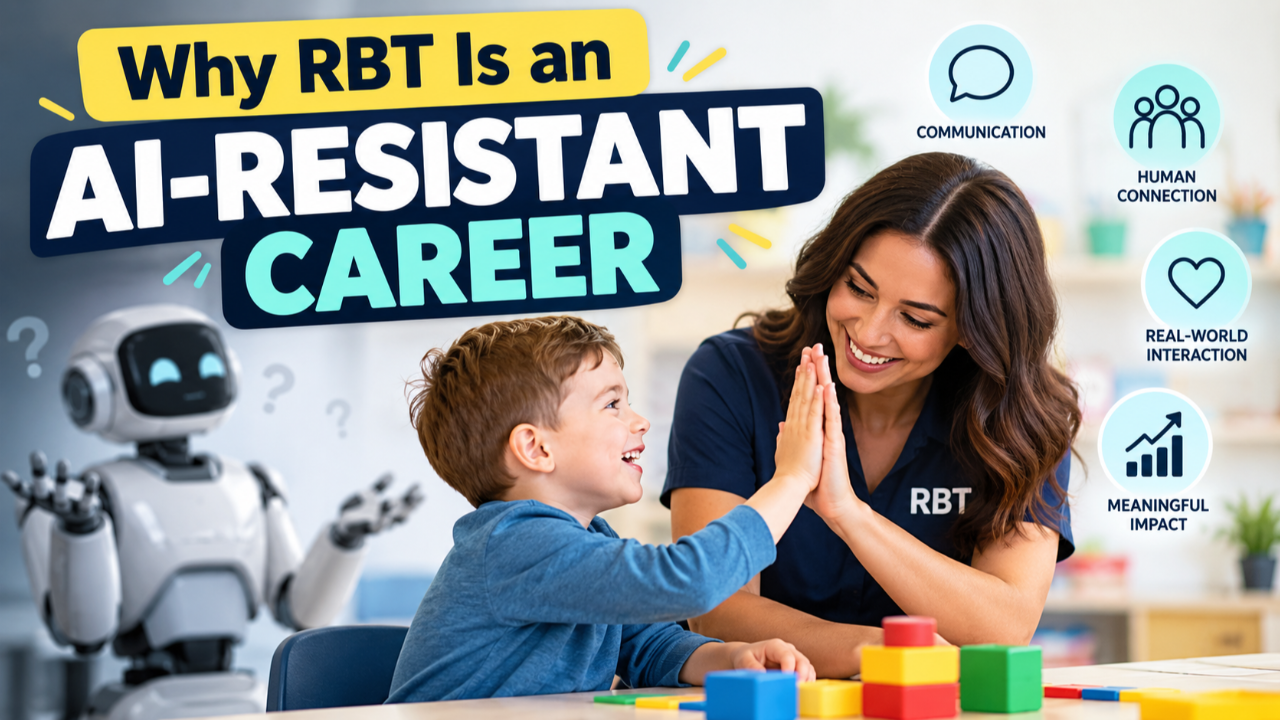
Why RBT® is an AI Resistant Career.
Oct 04, 2026A Registered Behavior Technician® or RBT® career is relatively resistant to being replaced by artificial intelligence because the job depends heavily on direct, human interaction. RBTs work face-to-face with clients, often children with autism and other developmental needs. They help people practice communication, social, daily-living, and other skills while following a treatment plan developed by a qualified behavior analyst.
AI may help RBTs with certain parts of their work, for example, organizing information, supporting documentation, or analyzing data but many core RBT responsibilities are difficult for technology to replace.
An RBT® needs to observe behavior in real time, respond to what a client does, build rapport, provide reinforcement, teach hands-on skills, collect data, and adjust moment by moment while following the treatment plan and supervisor's direction.
#AIProofCareer #RBT #RBTCareer #CareerTok #CareerChange #FutureProofCareer #BehaviorAnalysis #ABAtherapy
For example, imagine a child learning how to interact appropriately with other children. An RBT might practice taking turns, sharing, asking for something, and responding when another child says no. The RBT® observes the child's reactions and provides encouragement and reinforcement at exactly the right moments.
RBTs require a level of physical presence and real-world human interaction that AI cannot simply substitute for. This doesn't mean RBTs will be unaffected by AI. Technology will likely change how some aspects of the job are performed. In many cases, however, AI may function more as a tool that helps RBTs do their jobs rather than replacing the person providing direct care.
That's one reason RBT® can be attractive to someone concerned about automation: it's a people-centered profession where human interaction isn't just part of the job—it's at the heart of the job!
